
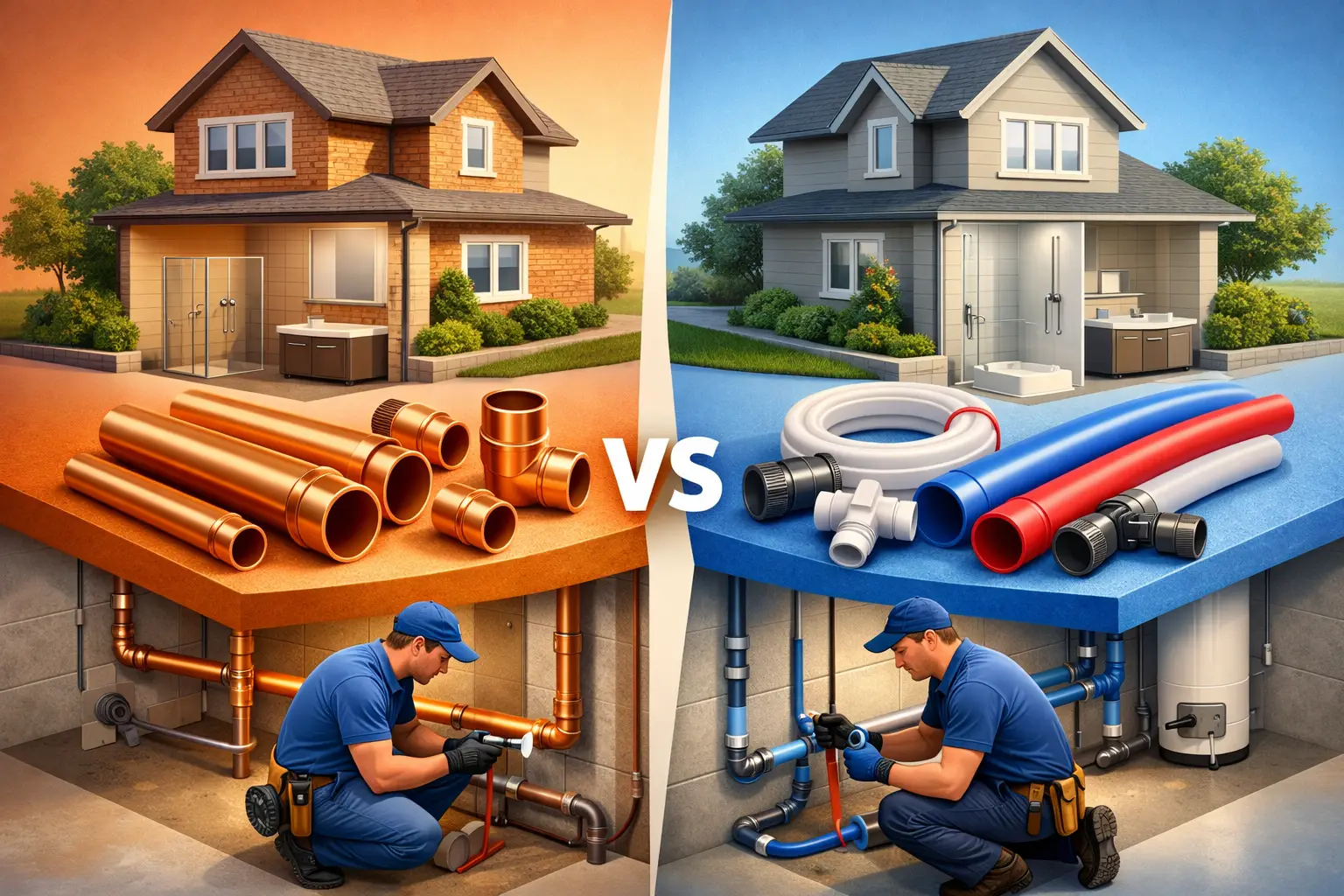
A pinhole leak behind a finished wall or a burst line during a cold snap can turn a pipe-material decision into a costly disruption. In the copper piping vs pex discussion, there is no single winner for every property. The right choice depends on your water conditions, building layout, budget, local code requirements, and whether you are installing new plumbing or repairing one section.
Copper has a long record in residential and commercial plumbing. PEX, or cross-linked polyethylene, has become a common alternative because it is flexible, efficient to install, and well suited to many modern water distribution systems. Knowing where each material performs best helps homeowners and property managers make a practical decision rather than choosing based on upfront cost alone.
Copper Piping vs PEX: The Core Differences
Copper is a rigid metal pipe joined with soldered, press-fit, or other approved fittings. It is visible in many older homes and commercial buildings, and it remains a trusted option for exposed mechanical rooms, certain renovation projects, and applications where durability and appearance matter.
PEX is a flexible plastic tubing used primarily for indoor potable-water supply lines. Because it bends around corners, installers can often run longer continuous sections with fewer fittings hidden behind walls. It is generally not used for exposed exterior installations because sunlight can damage it over time.
The practical distinction is straightforward: copper is rigid, heat-resistant, and proven over decades; PEX is flexible, faster to route, and more forgiving in cold conditions. Both can provide reliable service when the system is properly designed, installed, and maintained.
Cost: Installation Usually Drives the Difference
Material prices move over time, but copper typically costs more than PEX. The larger difference often comes from labor. Copper needs precise measuring, cutting, cleaning, fitting, and joining. Every change of direction usually requires a fitting, and working in tight walls or ceilings can add time.
PEX can reduce installation time because it bends around obstacles. In a manifold-based layout, separate lines can run from a central distribution point to individual fixtures. This approach may simplify future isolation, allowing a technician to shut off water to one bathroom or appliance without interrupting the entire property.
That does not mean PEX is automatically the lower-cost answer in every repair. If a short, accessible section of copper needs attention, repairing that section may be sensible and avoid unnecessary replacement work. A professional assessment should look at the pipe's condition, the cause of the problem, and access before recommending a larger change.
Durability and Expected Service Life
Copper has an established reputation for longevity. It does not degrade from ultraviolet exposure inside a building, tolerates high temperatures well, and resists physical damage better than flexible tubing. For exposed piping in utility rooms, commercial spaces, or areas where pipes could be bumped, copper offers a strong physical advantage.
Its performance, however, is closely tied to water chemistry and installation quality. Highly acidic water, certain disinfectant levels, excessive water velocity, poor electrical bonding, and improper joining practices can contribute to corrosion or pinhole leaks. When repeated copper leaks occur, replacing pipe without evaluating the underlying water or system condition may only postpone the next issue.
PEX does not corrode like metal and is not affected by acidic water in the same way. It can be a strong fit where water conditions have been hard on copper. However, it is more vulnerable to cuts, crushing, rodent damage, and prolonged UV exposure. It must also be supported correctly and kept away from sources of excessive heat.
The fitting system matters as much as the tubing. PEX connections may use crimp rings, clamp rings, expansion fittings, or push-to-connect fittings approved for the application. A reliable installation uses compatible components, correct tools, proper spacing, and accessible connections where possible.
Cold-Weather Performance and Freezing Risk
For properties in cold climates, freeze resistance is a meaningful factor. PEX can expand when water freezes and may return closer to its original shape after thawing. Copper is rigid and can split when water expands inside it.
PEX is not freeze-proof. A fully frozen PEX line can still be damaged, especially near fittings, valves, or restricted sections. More importantly, repeated freezing can damage finishes, fixtures, and nearby equipment even if the tubing survives. Insulation, air sealing, appropriate pipe placement, and maintaining suitable indoor temperatures remain the best protections.
Copper can still be an appropriate choice in cold-climate buildings when it is installed in conditioned space and properly insulated. The material alone does not prevent frozen plumbing. Pipe location and building envelope details are often the deciding factors.
Water Quality, Taste, and Safety Considerations
Both copper and PEX products intended for drinking-water plumbing must meet applicable standards for potable-water use. Neither material should be selected based solely on broad claims about “better” water. The quality of water reaching the tap also depends on the municipal supply, building plumbing, filtration equipment, fixture condition, and how long water sits in the lines.
Some people prefer copper because it is metal rather than plastic. Others value PEX because it avoids metal corrosion concerns. In practice, a well-installed system using certified materials is the priority. New plumbing of either type should be flushed according to proper procedures before regular use.
If your property has hard water, unusual taste, staining, scale buildup, or recurring corrosion concerns, testing the water can provide useful direction. A water softener may reduce hardness-related scale in suitable applications, while a reverse osmosis system can address specific drinking-water goals at a dedicated tap. These solutions should be matched to test results and household or facility needs, not used as a substitute for correcting a plumbing defect.
Where Each Material Makes the Most Sense
Copper is often a sensible choice for exposed piping, high-temperature mechanical applications, targeted repairs on an existing copper system, and projects where physical durability is a leading concern. It can also preserve a consistent material approach in buildings with well-performing copper plumbing.
PEX is often attractive for whole-home repipes, additions, bathroom renovations, and projects with difficult routing through framing. Its flexibility can reduce the number of concealed joints and allow more direct water runs. It is also useful where past copper corrosion suggests that water chemistry should be considered as part of the project.
For commercial properties, the decision can be more complex. Recirculating hot-water systems, high-demand fixtures, mechanical room conditions, access for maintenance, code requirements, and operational downtime all affect material selection. A system that is appropriate for a single-family bathroom may not suit a restaurant, multi-unit property, or office facility.
Installation Details That Matter More Than Material
A quality installation starts with a plan. Pipe sizing must support fixture demand without causing excessive pressure loss or noise. Hot-water lines should be insulated where required, shutoff valves should be placed strategically, and penetrations through framing need protection against abrasion.
Water pressure deserves attention as well. Excessive pressure can shorten the life of fixtures, appliance hoses, valves, and pipe connections regardless of whether the supply lines are copper or PEX. Pressure regulation and expansion control may be appropriate when conditions call for them.
For PEX, avoid unprotected exposure to sunlight, respect clearance requirements near heat-producing equipment, and use the manufacturer-approved fittings for that tubing type. For copper, proper support, careful joining, and consideration of water chemistry are essential. These details are where professional workmanship protects the value of either material.
When to Repair and When to Repipe
One isolated leak does not automatically mean a full repipe is necessary. An accessible repair can be the most practical solution when the rest of the system is in good condition. On the other hand, repeated leaks in different locations, widespread corrosion, poor water flow, or major renovation access can make a planned repipe more cost-effective over time.
Before choosing, ask for a clear explanation of the pipe condition, repair options, proposed materials, expected access work, and any water-quality concerns that could affect the new installation. Transparent recommendations make it easier to balance immediate needs with long-term maintenance.
The best pipe is the one that fits your building, water conditions, and service goals - then gets installed with care. If you are planning a renovation or dealing with recurring plumbing concerns, a qualified assessment can turn a material choice into a dependable system plan.