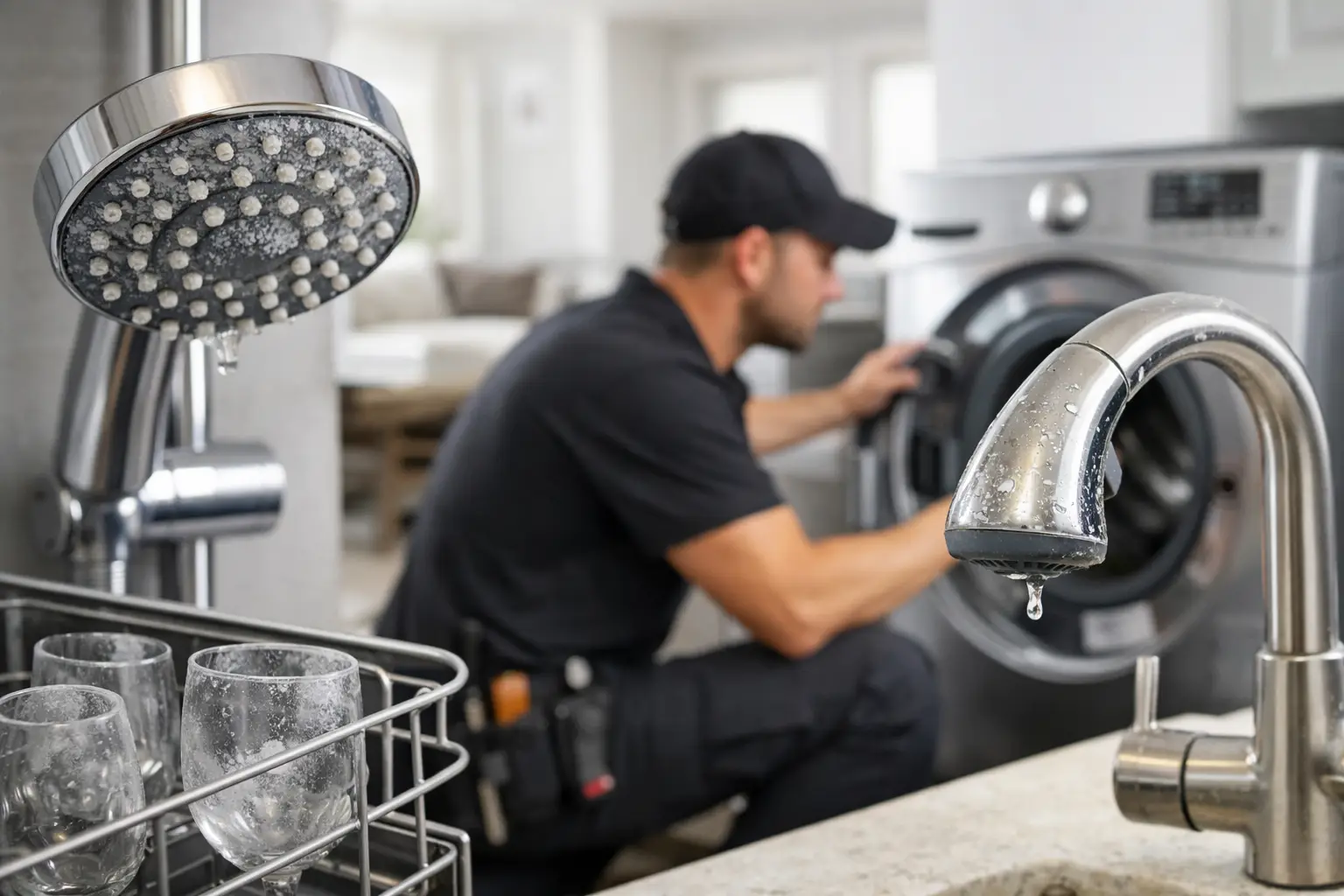
A dishwasher that leaves cloudy glasses, a water heater that seems to run longer, and a washing machine with stubborn mineral residue may share the same underlying issue. Can hard water damage appliances? Yes. The minerals in hard water can build up inside equipment over time, reducing performance and contributing to avoidable repair needs.
Hard water is common in many homes and commercial properties. It is not usually a health concern, but it can be hard on systems that heat, spray, rinse, or continually circulate water. Understanding where scale forms and responding early helps protect equipment without treating every mineral deposit as a reason to replace an appliance.
What Hard Water Does Inside Appliances
Hard water contains dissolved minerals, primarily calcium and magnesium. When water is heated or evaporates, those minerals are left behind as a chalky deposit called scale. You may see it on faucets, shower glass, and coffee makers, but the more consequential buildup often happens out of sight.
Inside appliances, scale can collect on heating elements, valves, spray arms, hoses, sensors, and narrow water passages. A thin layer may have little immediate effect. As it thickens, water flow and heat transfer become less efficient. The appliance then has to work harder to deliver the same result.
The rate of buildup depends on your water hardness, how much water the appliance uses, the temperature at which it operates, and how consistently it is maintained. A household with moderately hard water may only need routine cleaning. A larger property with very hard water and high daily demand may benefit from a more complete water-treatment approach.
Can Hard Water Damage Appliances Over Time?
Hard water rarely causes a single dramatic failure overnight. Its impact is gradual, which is why it is easy to overlook. Over months or years, scale can increase operating time, interfere with moving components, and place extra strain on parts designed to work with clear water flow and efficient heating.
Water heaters
Water heaters are among the most affected appliances because heat encourages mineral deposits to separate from the water. Sediment can settle at the bottom of a tank, while scale may coat heating surfaces. This can make the unit less efficient and sometimes contribute to popping or rumbling sounds during heating.
For tankless water heaters, mineral buildup can develop in the heat exchanger and restrict water flow. Regular flushing based on local water conditions is often an appropriate maintenance step. Whether a unit needs cleaning, repair, or replacement depends on its age, condition, and the extent of the issue.
Dishwashers
Hard water can leave spots on glassware and a white film on dishes, but the concern is not only cosmetic. Scale can partially block spray arms and affect how well detergent dissolves. Over time, deposits around the heating element, inlet valve, and internal passages can reduce wash performance.
A dishwasher cleaner designed for mineral removal can help with light buildup. If dishes remain cloudy after cleaning and adjusting detergent or rinse aid, the issue may be related to water hardness, appliance maintenance, or a mechanical component that needs professional assessment.
Washing machines
Washing machines can develop scale around water inlets, internal hoses, and heating components in models that use warm or hot cycles. Hard water also reduces the effectiveness of some detergents, so homeowners may use more product than necessary without getting cleaner laundry.
The result can be dull fabrics, residue on dark clothing, and a machine that does not rinse as effectively as it should. Using the right detergent amount and periodically running a manufacturer-approved cleaning cycle can reduce buildup. A softener can offer broader protection where hard water is persistent.
Refrigerators, ice makers, and coffee equipment
Appliances with small water lines are especially sensitive to mineral deposits. Refrigerator dispensers and ice makers may develop slow flow, reduced ice production, or visible sediment. Coffee machines and espresso equipment can lose heating efficiency and produce less consistent results when scale accumulates.
Filters are useful for sediment and certain contaminants, but they do not always soften water. Replacing a filter on schedule is still worthwhile, yet it may not fully solve recurring scale if hardness is the primary cause.
Signs Your Water May Be Affecting Equipment
A few visible clues can help separate a hard-water pattern from an isolated appliance problem. Look for white or tan crust around faucets and water connections, spotting on clean dishes, stiff towels, reduced shower flow, or frequent scale inside kettles and coffee makers.
Within appliances, warning signs can include longer heat-up times, inconsistent cleaning results, lower water flow, unusual heating noises, or repeat maintenance needs. These symptoms do not prove that hard water is the sole cause. A faulty valve, worn heating element, or drainage issue may produce similar results, so a proper inspection matters before deciding on a repair plan.
Practical Ways to Protect Appliances From Hard Water
The right solution should match the property, water hardness, and equipment in use. For some homes, targeted maintenance is enough. For others, treating water before it reaches high-use appliances offers more lasting value.
Start with the basics. Follow manufacturer guidance for cleaning cycles, filter changes, and descaling. Use products intended for the appliance rather than harsh household chemicals that can damage seals or finishes. For water heaters, periodic service can remove sediment and confirm that heating components and safety controls are operating properly.
If hard water affects multiple fixtures and appliances, consider a water softener. A properly selected and maintained softener reduces calcium and magnesium before they enter plumbing lines. This can help limit scale on water heaters, dishwashers, washing machines, fixtures, and other connected equipment.
Reverse osmosis systems serve a different role. They are commonly used for improved drinking water at a specific tap and can reduce a range of dissolved substances. They are not generally a whole-home replacement for water softening when the main goal is protecting every water-using appliance from hardness minerals.
For property managers and commercial operators, water use patterns matter as much as hardness levels. A restaurant, salon, office kitchen, or multi-unit building may have equipment that experiences more frequent cycling than a single-family home. Regular inspection, documented filter changes, and planned descaling can help prevent small restrictions from becoming disruptive service calls.
When to Call a Plumbing or Water Treatment Professional
Professional support is useful when scale returns quickly after cleaning, water pressure drops at several fixtures, an appliance repeatedly shows flow or heating problems, or you are unsure whether your water treatment equipment is working correctly. A water assessment can identify the level of hardness and help determine whether maintenance, a repair, or a treatment adjustment is the sensible next step.
For Kitchener homeowners and property operators, local water conditions and building plumbing can influence the best approach. A qualified technician can evaluate the appliance and the water source together rather than replacing a component that may continue to face the same mineral problem.
Plumingo can help assess plumbing performance, water softener needs, and filtration service with a clear recommendation based on the condition of your system. The goal is to address the cause of recurring scale while preserving equipment that is still serviceable.
Common Questions About Hard Water and Appliances
Does hard water void an appliance warranty?
It can depend on the manufacturer and the warranty terms. Most warranties cover defects in materials or workmanship, not damage tied to inadequate maintenance or water conditions. Keeping service records and following recommended cleaning guidance can be helpful.
Will a water softener eliminate all appliance maintenance?
No. A softener reduces hardness minerals, but appliances still need normal cleaning, filter changes, and periodic inspection. It can lower the scale burden, not eliminate every source of wear.
Can I remove existing scale myself?
Light deposits in accessible areas can often be addressed with manufacturer-approved descaling products. Heavy buildup inside water heaters, tankless systems, or appliance connections is better handled by a trained professional to avoid damaging components or creating leaks.
Treating hard water as part of routine property care is usually more effective than waiting for performance to decline. A little attention to water quality today can keep the appliances you rely on working cleaner, longer, and with fewer surprises.