
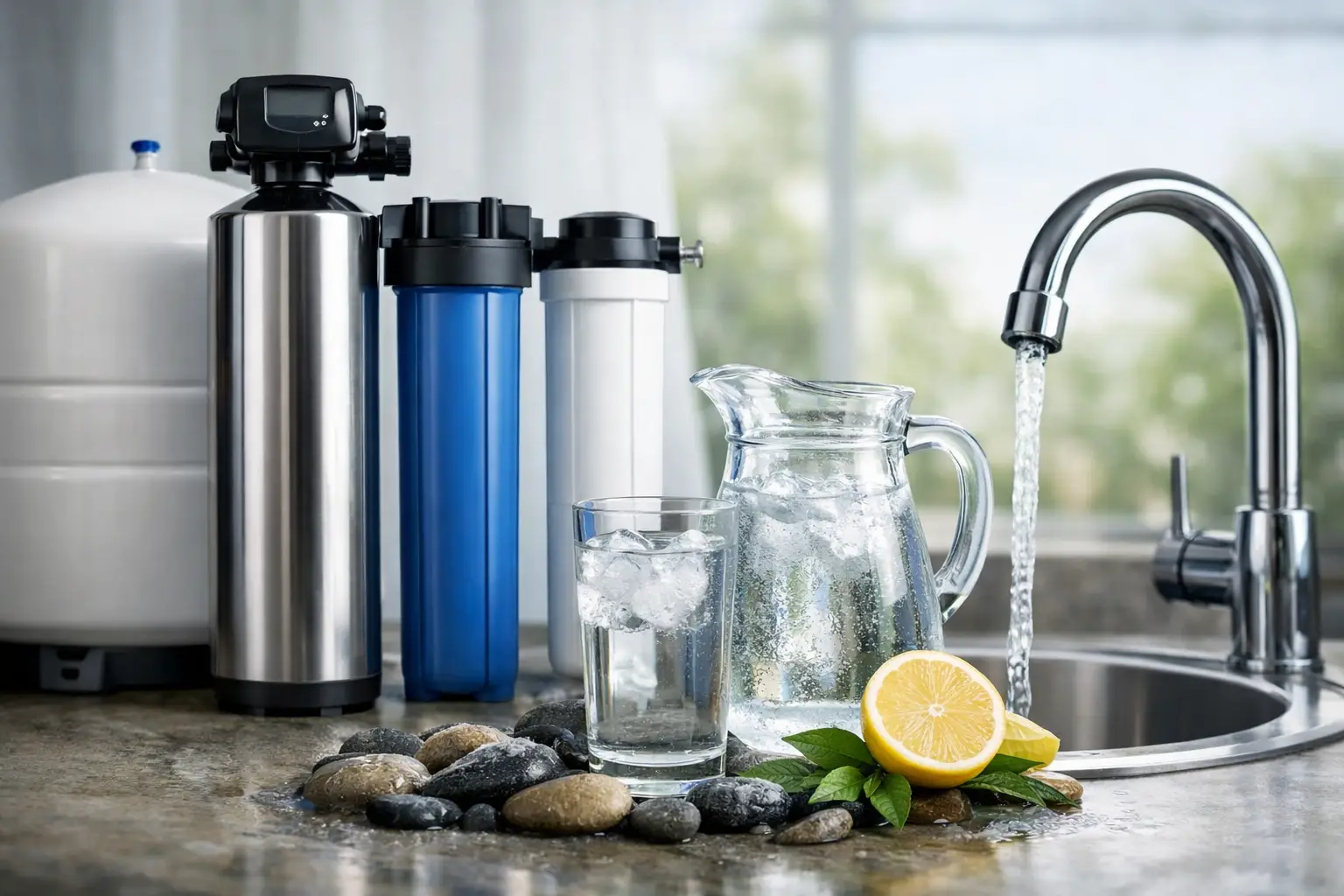
If your water leaves scale on fixtures, a chlorine taste in every glass, or sediment in the tub after a plumbing repair, point-of-use filters will only solve part of the problem. The best whole home water filters treat water where it enters the building, which means better water at every tap, longer appliance life, and fewer ongoing issues across the plumbing system.
For homeowners and property managers, that matters because water quality is not just a drinking water issue. It affects water heaters, dishwashers, coffee equipment, shower valves, laundry results, and the overall condition of pipes and fixtures. For commercial operators, poor incoming water can also create maintenance costs that are easy to underestimate until equipment starts failing early.
What makes the best whole home water filters worth it
A whole home system is a practical choice when the problem shows up throughout the property. If you only dislike the taste at the kitchen sink, a smaller under-sink option may be enough. But if the water smells like chlorine in the shower, leaves visible sediment, or causes buildup in multiple fixtures, a whole home approach is usually the better fit.
The main advantage is coverage. One properly sized system can protect plumbing and water-using equipment across the entire home or building. The trade-off is that selection matters more than many people expect. A filter that works well for city water may be the wrong choice for a well, and a system that improves taste may do very little for hardness.
That is where many buyers go off track. They shop by broad claims like "removes contaminants" instead of matching the equipment to the actual water conditions, flow rate, and service demands of the property.
The 9 best whole home water filters by use case
1. Sediment pre-filter systems
For homes with sand, rust, silt, or debris, a sediment pre-filter is often the first and most necessary stage. These systems are especially useful on well water, older municipal lines, or buildings with recurring disturbance in supply lines.
They protect valves, cartridges, softeners, and appliances from physical particles. They do not fix chlorine, odors, or dissolved minerals, but they are often essential because they keep downstream equipment from clogging too quickly.
2. Carbon whole home filters for city water
If your water is municipally supplied and the main complaint is chlorine taste or odor, carbon filtration is often the strongest starting point. A well-built carbon system reduces chlorine and improves taste and smell throughout the property.
This category is one of the best whole home water filters for families who want better shower water and cleaner-tasting tap water without overcomplicating the setup. It is less useful if hardness is the real issue, since carbon does not remove calcium and magnesium.
3. Catalytic carbon systems
Catalytic carbon is a step up when standard activated carbon is not enough. It is often chosen for more stubborn chemical tastes and odors, including chloramine in some municipal water supplies.
Compared with basic carbon units, these systems can offer better performance for certain contaminants, but they may cost more and require more attention to sizing. If the water utility uses chloramine rather than free chlorine, this option is worth a close look.
4. Backwashing carbon filters
For larger homes or light commercial settings, backwashing carbon systems are often the more durable choice. Instead of swapping disposable cartridges frequently, these systems clean the media bed through an automated backwash cycle.
That lowers maintenance pressure and can make operating costs more predictable over time. The trade-off is space, drain access, and a higher upfront investment.
5. Whole home water softener and filter combinations
Many people use the word filter when the real issue is hard water. If you have scale on faucets, spots on glassware, and mineral buildup in the water heater, a softener or a combined filtration and softening system may be the better answer.
These systems are among the best whole home water filters in real-world terms because they address two common problems at once - water quality and plumbing protection. They are especially valuable in areas with hard municipal supply or mineral-heavy groundwater.
6. Iron and manganese reduction systems
For well water, orange staining, metallic taste, or dark residue often points to iron or manganese. Standard sediment or carbon filters usually will not solve this by themselves.
A dedicated iron reduction system, sometimes paired with oxidation or specialized media, is the right fit when testing confirms the issue. This is a good example of why a water test should come before equipment selection. The wrong system may improve appearance slightly while leaving the core problem untouched.
7. UV systems paired with filtration
UV purification is not a filter in the strict sense, but it belongs in the conversation when bacteria or microbial risk is a concern, especially on private wells. UV works best when paired with sediment filtration because cloudy water can reduce effectiveness.
For properties where biological safety is the concern, this combination can be one of the best whole home water filters available. It is not a cure-all, though. UV does not remove sediment, hardness, or chemical contaminants.
8. High-flow cartridge systems
Some homes need a simpler installation with lower upfront cost, and that is where high-flow cartridge systems fit well. These can be effective for moderate sediment and chlorine reduction, particularly in smaller homes or properties with manageable water demand.
Their limitation is maintenance. If water quality is poor or usage is high, cartridge replacement adds up quickly. They are best for buyers who want a straightforward setup and are prepared to keep up with scheduled service.
9. Multi-stage custom systems
When the water has more than one issue, a custom multi-stage system is usually the best solution. A common setup might include sediment filtration, carbon treatment, softening, and UV or iron reduction depending on the source water.
This is often the right answer for larger homes, mixed-use properties, and commercial spaces where water quality affects operations. It costs more upfront, but it can solve the actual problem rather than forcing one product to do a job it was never designed for.
How to choose the best whole home water filters for your property
Start with the water source. City water and well water create very different equipment needs. Municipal water often points to chlorine, chloramine, or taste and odor concerns. Well water more often involves sediment, hardness, iron, sulfur, or microbial risk.
Next, look at the symptoms across the property. White scale usually means hardness. Rotten egg smell often suggests sulfur. Orange staining points toward iron. Grit in fixtures means sediment. If the issue only appears at one faucet, the plumbing branch may be part of the problem rather than the incoming supply.
Flow rate matters just as much as contaminant type. A system that cannot keep up with the home's peak demand will create pressure loss, especially when multiple bathrooms, laundry, and irrigation overlap. This is a common mistake in larger homes and commercial spaces.
Maintenance should also be part of the buying decision, not an afterthought. Some systems need frequent cartridge changes. Others need salt, backwashing, lamp replacement, media replacement, or routine servicing. The best system is not the one with the longest feature list. It is the one that fits the property and can be maintained properly.
Common mistakes buyers make
The biggest mistake is buying before testing the water. Marketing claims are broad, but water conditions are specific. A test gives you the basis for choosing the right treatment path instead of guessing.
Another common issue is focusing only on drinking water quality. Whole home treatment should also protect plumbing infrastructure. If hard water is shortening the life of fixtures and appliances, a taste-focused filter alone will not solve the larger cost problem.
It is also easy to underestimate installation requirements. Drain access, bypass valves, shutoffs, pressure conditions, and available space all affect what can be installed cleanly and serviced later. A premium system still performs poorly if it is undersized or installed without considering the plumbing layout.
When professional guidance makes sense
If you are deciding between a filter, a softener, or a multi-stage setup, this is usually where professional assessment saves time and money. The same goes for mixed symptoms such as chlorine odor plus scale, or sediment plus staining on well water.
A qualified plumbing and water treatment provider can match the equipment to the water profile, the building demand, and the maintenance expectations of the owner or operator. For homeowners, that means fewer surprises after installation. For property managers and businesses, it means more predictable performance and fewer service disruptions.
In some cases, the right answer is simpler than expected. In others, it is a layered treatment plan. Either way, choosing from the best whole home water filters is less about finding a single top-rated product and more about getting the right system for the water you actually have.
Clean water should support the property, not create extra work for it. When the filtration plan matches the source, flow, and plumbing conditions, the result is not just better-tasting water - it is a system that runs better every day.