
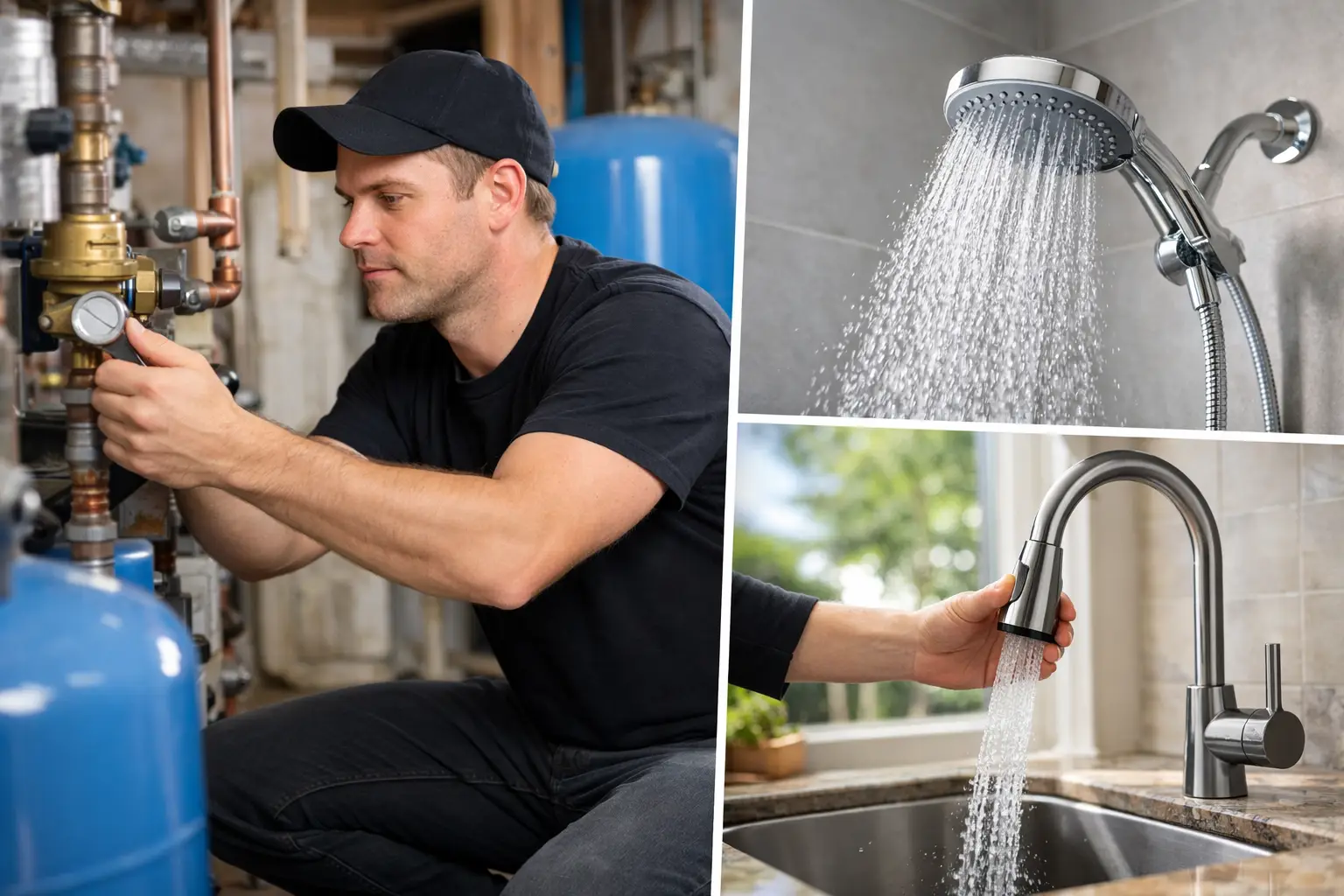
A shower that fades to a trickle when someone starts the dishwasher is more than an annoyance. It is a useful clue. The best ways to improve water pressure begin with finding out whether the problem is limited to one fixture, one area of the building, or the entire plumbing system. That distinction prevents wasted repairs and helps protect your pipes, appliances, and water treatment equipment.
Water pressure and water flow are often used interchangeably, but they are not the same. Pressure is the force moving water through the system. Flow is the amount of water that actually reaches the faucet or showerhead. A restriction at a fixture can reduce flow even when the building's supply pressure is perfectly adequate.
Start by identifying the pressure pattern
Before adjusting a valve or replacing a fixture, test a few locations. Run cold water at a kitchen faucet, bathroom sink, shower, and outdoor hose connection if available. Then repeat with hot water. Note whether the issue is consistent, limited to one floor, or appears only when several fixtures run at once.
Low flow at one faucet usually points to a local issue, such as mineral buildup in the aerator or a partially blocked supply line. Low pressure at every fixture may involve the main shutoff valve, pressure regulator, water meter, supply line, or a broader plumbing restriction. If only hot water is weak, the water heater, its shutoff valve, or hot-water piping deserves closer attention.
For property managers and commercial operators, compare affected areas by zone. A single weak restroom or kitchenette often has a different cause than a building-wide reduction in performance.
Clean aerators and showerheads first
Minerals, sediment, and fine debris collect where water exits a fixture. Aerators and showerheads are inexpensive to clean, and doing so can restore a noticeable amount of flow without changing any plumbing components.
Remove the aerator from the faucet tip carefully, keeping track of its screen and washer. Rinse away loose debris and soak mineral-coated parts in a suitable descaling solution. A showerhead can be removed and cleaned the same way. If it is heavily scaled, worn, or damaged, replacement may be more practical than repeated cleaning.
This step is especially relevant in homes with hard water. Hardness minerals can gradually narrow small openings, even when the pipes themselves are in good condition. A water softener can help reduce new scale formation, but it will not instantly remove existing buildup from every fixture.
Make sure valves are fully open
A partly closed valve can quietly limit water to one fixture or the whole building. Check the shutoff valves beneath affected sinks and behind toilets, along with the main water shutoff where the service enters the property. Valves should generally be fully open unless they are being used to isolate a repair.
Do not force a stiff or corroded valve. Older valves can leak or fail when moved after years in the same position. If a valve will not turn smoothly, or if moisture appears around its stem, have it assessed by a qualified plumber rather than applying more force.
If low pressure began immediately after plumbing work, confirm that all relevant isolation valves were reopened. This simple check is often overlooked after fixture, water heater, or filtration service.
Check whether the problem is hot, cold, or both
Comparing hot and cold water narrows the diagnosis quickly. When cold water is strong but hot water is weak throughout the building, sediment or scale may be restricting hot-water pathways. A partially closed valve near the water heater can also be responsible.
Tank-style water heaters can collect sediment over time, particularly where water has high mineral content. Routine maintenance may improve performance and help the equipment operate efficiently. However, flushing an older unit is not always a do-it-yourself task. The condition of the heater, drain valve, and internal components all matter.
If both hot and cold pressure are reduced equally, look upstream at the main supply, pressure regulator, or whole-home equipment rather than focusing on the water heater alone.
Inspect filters and water treatment equipment
Water treatment improves water quality, but a neglected filter can restrict flow. Whole-home sediment filters, cartridge housings, and certain filtration stages need maintenance on schedule. A cartridge that is loaded with sediment may cause a gradual pressure drop that becomes most obvious during high household demand.
Reverse osmosis systems require a more specific diagnosis. They are designed to produce purified water at a dedicated faucet, not to increase water pressure throughout the home. If an RO faucet is slow, the cause may be overdue prefilters, a low-pressure storage tank, a worn membrane, or a shutoff issue. Servicing the system correctly protects both flow and water quality.
Water softeners can also affect flow if they are undersized, incorrectly installed, or affected by a blockage. Do not assume the softener needs replacement. A professional inspection can determine whether cleaning, adjustment, repair, or a component change is the appropriate next step.
Test supply pressure before making major changes
A pressure gauge connected to a hose bib can provide useful information about the water entering the property. Pressure that is consistently too low may indicate a supply-side issue, while pressure that is too high can place unnecessary stress on fixtures, appliance hoses, and plumbing connections.
Many buildings use a pressure-reducing valve to control incoming pressure. These valves can wear out or become less reliable over time. Adjustment may be possible, but it should be done cautiously and only after confirming the existing pressure. Raising pressure without checking the system can create leaks or expose weak connections.
Pressure readings can also change throughout the day as neighborhood demand changes. A single reading is helpful, but repeated observations during quiet and busy periods offer a better picture.
Consider pipe condition and demand
Older galvanized steel pipes can corrode internally. The outside may look intact while the inside diameter becomes increasingly restricted. This often creates a gradual decline in flow, sometimes affecting upper floors or distant fixtures most severely. Localized pipe repair may solve a targeted issue, while widespread corrosion calls for a measured discussion about longer-term repiping options.
Demand matters as well. A home with multiple showers, laundry equipment, irrigation, and several occupants may outgrow the capacity of its plumbing layout. The right answer is not automatically a booster pump. In some cases, improving fixture efficiency, correcting restrictions, or adjusting the system layout is the better approach.
Commercial sites need the same careful assessment. Peak demand, fixture count, building height, and operational hours all influence the right solution. A pressure-boosting system may be appropriate for some properties, but only after the supply and piping are evaluated.
Know when professional service is the practical choice
Call for expert assessment when pressure drops suddenly across the building, water is discolored, pipes make new noises, a regulator is suspected, or a leak may be present. Professional help is also sensible when valves are seized, filtration equipment is involved, or the property has older piping with recurring flow problems.
A clear diagnosis should come before a major repair recommendation. At Plumingo, plumbing and water treatment concerns can be evaluated together, so a pressure issue is not treated as separate from filter performance, softener condition, or the overall health of the system.
Better water pressure is usually the result of removing the right restriction, not simply forcing more pressure into the pipes. Start with the fixture and work back through the system. That method keeps the next step practical, protects the plumbing you already have, and makes it easier to choose service only when it adds real value.