
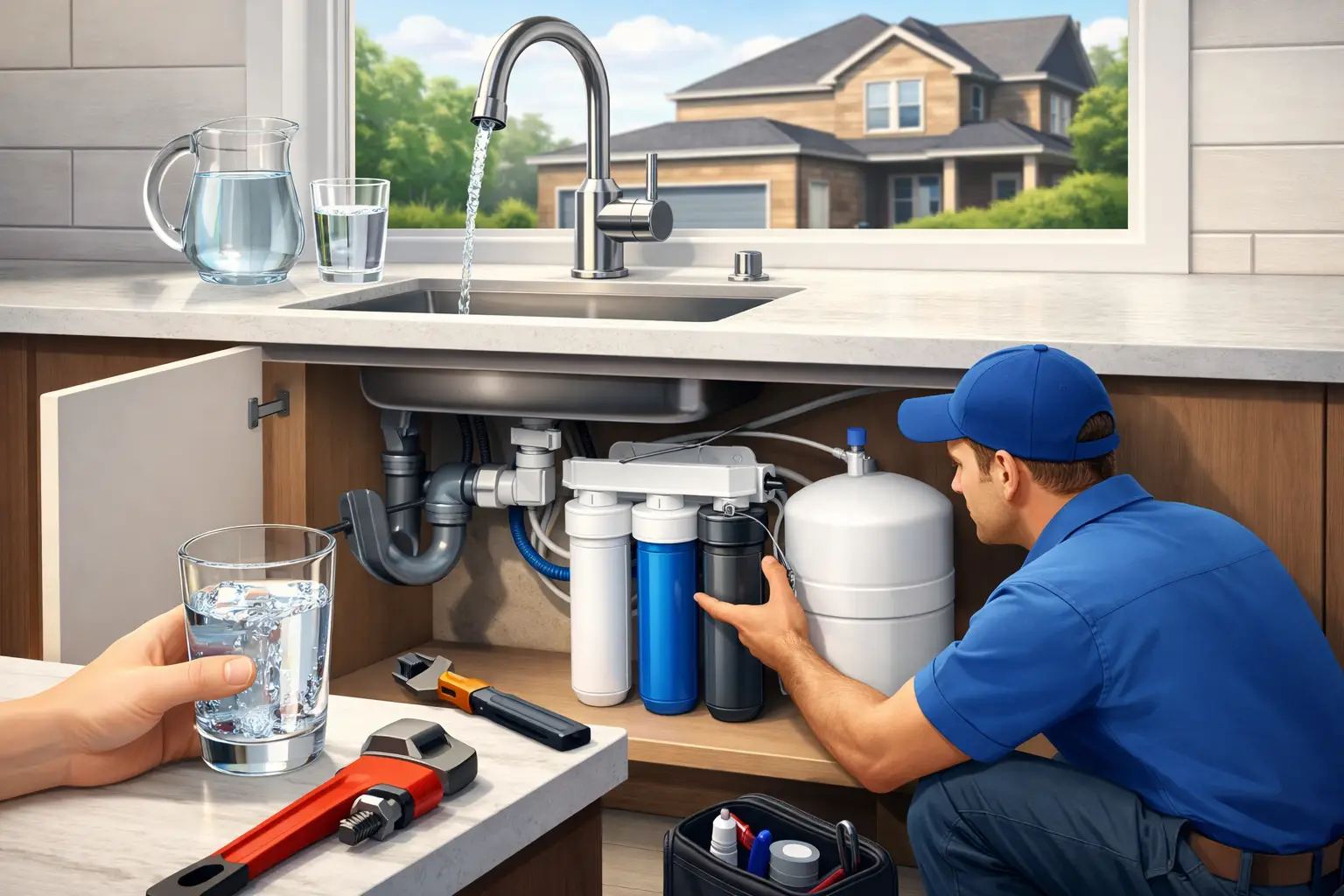
A pitcher filter can improve the taste of one glass at a time. An under-sink system treats the water where your household actually uses it - at the kitchen faucet, for cooking, coffee, filling bottles, and washing produce. The best under sink water filters are not simply the systems with the most stages. They are the systems matched to the contaminants, water pressure, available cabinet space, and maintenance capacity of the property.
For homeowners and property managers, that distinction matters. A filter that is oversized, poorly installed, or neglected can create more inconvenience than value. The right system should improve water quality while remaining practical to service over the long term.
What Makes an Under-Sink Filter a Good Choice?
Under-sink filters are installed inside the cabinet below a kitchen sink and connect to either a dedicated drinking-water faucet or, in some configurations, the existing faucet. Because they use larger filter cartridges than countertop pitchers, they generally offer higher capacity and more consistent filtration.
They are a strong fit when you want better drinking and cooking water without adding a whole-home treatment system. Whole-home equipment addresses water used throughout the building, such as hardness, sediment, or odor at showers and appliances. An under-sink filter is more targeted. It focuses on the water you consume most often.
The best choice depends on the problem you are trying to solve. Chlorine taste calls for a different approach than dissolved minerals, lead concerns, or elevated total dissolved solids. Start with the water, not the marketing claims on the box.
Types of the Best Under Sink Water Filters
Carbon block filtration
Carbon block systems are a practical option for municipal water with chlorine taste, common odors, and certain organic compounds. A quality carbon filter can make tap water taste cleaner without the complexity of a tank or drain connection.
This category is often the right starting point for households that are generally satisfied with their water supply but want better taste and reduced exposure to specific contaminants. Check the filter's performance data carefully. “Carbon filtration” is a media type, not a complete description of what the system removes.
Carbon filters need regular cartridge changes. Leaving a cartridge in service beyond its rated life can reduce flow and performance. Replacement intervals vary by household water use, sediment levels, and cartridge design.
Multi-stage systems
Multi-stage under-sink filters combine sediment filtration with carbon and, sometimes, specialty media. The sediment stage protects downstream filters from fine particles, while carbon stages address taste and odor. Specialty media may be included for particular metals or chemical concerns.
These systems can be useful where water contains visible sediment or where a single carbon cartridge is not enough. The trade-off is more housing, more cartridges, and more maintenance points. Before choosing one, confirm that each stage serves a real purpose for your water condition.
Reverse osmosis systems
Reverse osmosis, often called RO, uses a membrane to reduce a broad range of dissolved substances. It is commonly considered when a water report shows elevated dissolved solids or when a household wants a higher level of drinking-water treatment than carbon filtration alone can provide.
An RO system typically includes prefilters, a membrane, a storage tank, and a dedicated faucet. Some models also include a post-carbon filter for final taste improvement. They require space under the sink and usually send some water to the drain during the treatment process. Water pressure, drain access, and cartridge service all affect performance.
RO is not automatically the best option for every kitchen. If chlorine taste is the only concern, a well-selected carbon system may be simpler and less costly to maintain. If mineral content or a specific dissolved contaminant is the concern, RO may be worth the additional installation and service requirements.
Systems designed for a specific contaminant
Some filters are designed around a verified concern, such as lead, cysts, or particular chemical compounds. These should be selected based on a current water test, local utility information, or a clear property-specific issue. Avoid relying on broad claims such as “removes everything.” No practical point-of-use system removes every possible substance under every operating condition.
Look for documentation that identifies the contaminants reduced, the testing standard used, cartridge capacity, and required operating conditions. A system can only perform as intended when installed and maintained within those conditions.
How to Choose the Right System for Your Property
Begin by identifying your water source. Municipal water and private well water can present very different treatment needs. City water may be disinfected with chlorine or chloramine and can vary by neighborhood or building plumbing. Well water may require more attention to hardness, iron, sediment, bacteria, or other naturally occurring conditions.
A water test is especially valuable when water has an unusual odor, staining, recurring sediment, or a noticeable taste that a basic filter has not resolved. For properties served by municipal water, reviewing the local water report can also help define the starting point. If the issue appears only at one faucet, the building's plumbing may deserve inspection as well.
Next, measure the installation constraints. Under-sink systems need enough room for filter housings, tubing, and future cartridge changes. Reverse osmosis systems also need room for a tank unless they use a tankless design. A crowded cabinet, garbage disposal, or pull-out waste bin can limit the options.
Water pressure is another practical factor. Low pressure can affect filter flow and RO production. High pressure may require a pressure-control component. A professional installation can confirm the connection points, protect the faucet and drain setup, and keep tubing accessible for future service.
For commercial break rooms, clinics, offices, and small food-service areas, capacity matters as much as filtration. A system built for a household may not keep up with frequent bottle filling or staff use. Commercial operators should plan around daily demand, filter replacement access, and a clear maintenance schedule.
Installation Details That Affect Performance
A clean installation is more than an appearance issue. Filter housings need to be mounted securely, tubing should not kink or rub against sharp cabinet edges, and shutoff valves must remain accessible. A dedicated faucet should be positioned so it can be used comfortably and serviced without disturbing the main kitchen faucet.
RO systems also need a properly installed drain connection. Improvised drain connections can lead to leaks, noise, or sanitation concerns. After installation, the system should be flushed according to the manufacturer's instructions, checked for leaks, and labeled with service dates.
If your existing faucet has weak flow, corrosion, or a leaking shutoff valve, address those plumbing issues before adding a filtration system. Installing a premium filter onto aging connections can make a later repair more complicated. Repairing serviceable plumbing components first is often the more sensible path.
Maintenance Is Part of the Purchase Decision
Every under-sink filter has a service schedule. Carbon cartridges may need replacement every several months, while RO membranes generally last longer but still require periodic evaluation. Sediment-heavy water can shorten cartridge life, and a drop in flow can signal that service is due.
Keep replacement dates visible inside the cabinet or in a property maintenance log. For managed properties, record the system model, cartridge numbers, installation date, and any water-test results. This avoids guesswork when staff changes or when service is needed later.
Do not wait until water tastes unpleasant to replace filters. Taste is useful feedback, but it is not a reliable indicator of filter capacity. Follow the rated gallon capacity and time interval, using whichever limit comes first.
Questions Worth Asking Before You Buy
Ask what the system is certified or tested to reduce, how often each cartridge needs replacement, and whether replacement filters will remain readily available. Confirm the required water pressure, the amount of cabinet space needed, and whether the system uses a dedicated faucet.
For reverse osmosis, ask about water efficiency, tank size, membrane life, and whether a pressure-boosting pump is appropriate for the site. For any system, ask who will service it if a leak, low-flow issue, or installation concern develops.
The most useful filtration system is one that fits your actual water conditions and is maintained on schedule. A focused water assessment, proper installation, and dependable service plan will do more for your drinking water than choosing the filter with the longest feature list.