
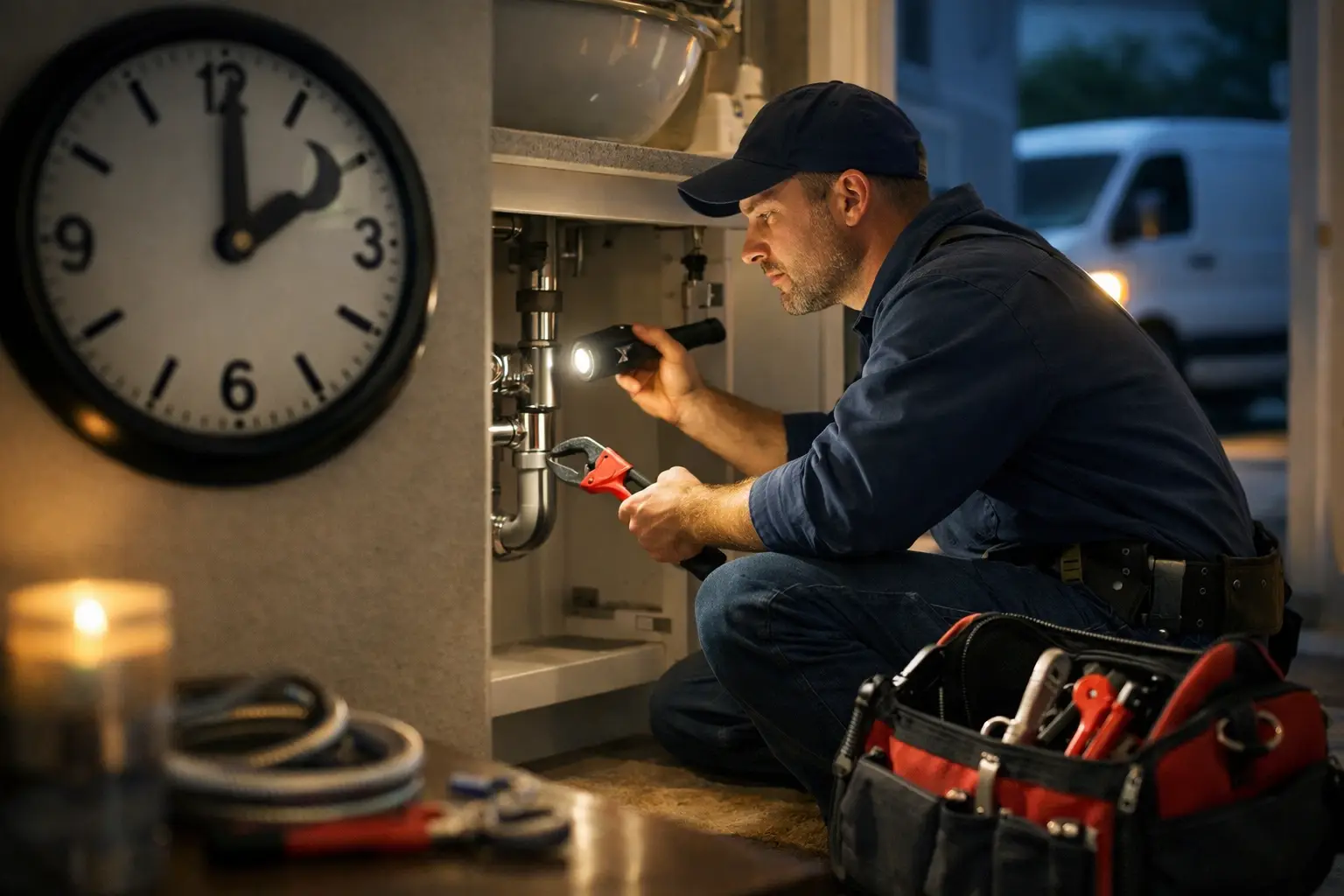
A toilet overflowing at 2 a.m. is not a minor inconvenience. Neither is a burst pipe in a utility room, a failed sump pump during heavy rain, or a water heater leaking into finished space. When you need 24 7 emergency plumbing help, the real priority is simple - stop damage fast, restore function, and know exactly what happens next.
That is where emergency service should feel different from a standard booking. You are not looking for vague arrival windows, unclear pricing, or a temporary patch that turns into a second emergency a week later. You need a qualified plumber who can assess the issue quickly, protect the property, and make the right repair decision under pressure.
What 24 7 emergency plumbing help should actually cover
Not every plumbing problem is an emergency, but many become one when water is actively escaping, drainage has stopped completely, or essential fixtures are unusable. The strongest emergency plumbing response covers the situations that create immediate risk to property, sanitation, or business continuity.
That usually includes burst or frozen pipes, major leaks, sewer backups, overflowing toilets, blocked drains affecting multiple fixtures, failed water heaters, sump pump problems, and sudden loss of water where the cause is not obvious. In commercial settings, the threshold can be even lower. A leak behind a restaurant wall, a drain issue in a washroom, or equipment water supply failure can interrupt operations quickly.
Some calls fall into a gray area. A slow sink drain at night may be frustrating but not urgent. A minor faucet drip can usually wait. On the other hand, a small leak under pressure can escalate fast, especially if it is near electrical systems, finished flooring, inventory, or shared building infrastructure. Good emergency support is not just about showing up after hours. It is also about helping you determine whether the situation needs immediate dispatch.
The first steps before emergency plumbing arrives
The best outcome often depends on what happens in the first few minutes. If water is moving where it should not, shut off the nearest fixture valve if you can do so safely. If that does not stop the issue, turn off the main water supply. For a water heater leak, isolate the unit if possible. If sewage is backing up, stop using all fixtures connected to that line.
Electricity changes the risk level. If water is approaching outlets, appliances, or a panel area, keep your distance and follow electrical safety precautions. For homeowners, that may mean avoiding the affected area until a professional can advise further. For property managers and commercial operators, it may mean isolating the space and notifying occupants immediately.
These first steps do not replace repair. They buy time, reduce damage, and help the plumber arrive to a more controlled situation. They also make diagnosis faster because the technician can focus on the source rather than just active flooding.
Why response time matters, but accuracy matters too
Fast arrival is critical, but speed on its own is not enough. Emergency plumbing can go wrong when the goal is only to stop the immediate symptom without understanding the cause. A line may be cleared without identifying a deeper blockage. A burst section may be replaced while pressure issues or freezing risk go unaddressed. A leaking water heater may be isolated, but the broader condition of the system may still be unknown.
This is especially relevant in properties with water treatment equipment, older plumbing materials, or recurring drainage issues. A technician should be able to stabilize the emergency and also explain whether the problem appears isolated or part of a larger system failure. That distinction affects cost, repair scope, and whether further work should be scheduled right away.
Premium service means balancing urgency with judgment. In some cases, a same-visit permanent repair is realistic. In others, the right move is emergency containment, system testing, and a return visit with the exact parts or equipment needed for a proper fix.
24 7 emergency plumbing help for homes
Residential plumbing emergencies are stressful because they disrupt the parts of daily life people depend on most - kitchens, bathrooms, hot water, laundry, and clean water access. The practical concern is damage. The emotional concern is loss of normal use.
In homes, the most common emergencies tend to involve active leaks, clogged main drains, failed water heaters, sump pump issues, and toilet overflows that cannot be controlled with basic shutoff steps. Winter conditions can add frozen pipe risk, and older homes may present hidden complications once walls or floors are involved.
The right emergency plumber should communicate clearly from the first call. Homeowners need to know what to shut off, whether to stop using certain fixtures, what kind of arrival window to expect, and whether the repair is likely to be immediate or staged. Clear communication lowers stress and helps prevent avoidable damage.
If the property also uses reverse osmosis filtration, water softeners, or other treatment equipment, that expertise matters. A leak or pressure issue may involve more than the visible fixture. It may connect to a broader water quality or distribution problem that a general emergency visit could miss.
24 7 emergency plumbing help for commercial properties
Commercial plumbing emergencies have a different cost profile. Water damage is still serious, but the larger issue is interruption. Tenants cannot operate. Staff cannot use facilities. Customers see disruption immediately. In some environments, health and safety rules leave little room for delay.
That is why commercial operators need 24 7 emergency plumbing help that is structured, not improvised. The technician should understand access protocols, multi-unit plumbing layouts, shutoff coordination, and the operational pressure of restoring service quickly. A property manager may need updates for residents. A restaurant may need a timeline before opening. A retail site may need to isolate a washroom while protecting adjacent units.
Commercial emergency work also benefits from clean documentation and transparent recommendations. Some issues can be stabilized after hours and completed during standard operating windows. Others require immediate repair because delaying creates higher cost or compliance risk. A capable provider explains that difference clearly and avoids overpromising.
What transparent pricing means in an emergency
Emergency service costs more than scheduled work, and most customers understand that. What they do not want is uncertainty layered on top of urgency. Transparent pricing means being clear about call-out structure, after-hours rates, diagnostic charges, and how repair approval works before major work begins.
That does not mean every emergency can be quoted exactly over the phone. Plumbing systems vary too much for that. It does mean you should know the pricing framework, what the initial visit includes, and when additional authorization is required. For larger repairs, especially in commercial settings, clear documentation protects everyone involved.
The most trustworthy emergency plumbers do not use pressure to push unnecessary work in a stressful moment. They explain the immediate repair, the recommended next step, and what can wait if the situation has been safely stabilized.
How to choose the right emergency plumbing provider
Availability is the starting point, not the full standard. A provider offering 24 7 emergency plumbing help should also have the technical range to deal with water supply, drainage, fixture failures, water heater issues, and related water treatment systems when relevant.
Look for signs of operational readiness. Can they guide you before arrival? Do they explain next steps in plain language? Are they set up for both urgent response and follow-up repair? Can they work across residential and commercial environments without changing the service standard?
This is where a platform like Plumingo stands apart. Fast dispatch matters, but so does the ability to support the full water system, including plumbing repair and treatment-related service, with a clear booking and communication process.
When emergency service becomes long-term prevention
A good emergency call should not end with the water stopped and nothing learned. Repeated backups, pressure fluctuations, scale buildup, aging valves, and recurring water heater trouble usually point to broader system conditions. Once the urgent issue is under control, that is the right time to assess whether maintenance, replacement, or water quality improvements could reduce future risk.
For homeowners, that may mean inspecting shutoff valves, checking water heater condition, or reviewing filtration and softening equipment. For commercial properties, it may mean building-level inspections, fixture planning, and scheduled support that reduces after-hours failures.
Not every emergency is preventable. Pipes fail unexpectedly, drains clog at the wrong time, and equipment reaches the end of its life without much warning. But many costly events leave smaller signs first. The value of expert emergency service is not only in the immediate repair. It is in identifying what the system is telling you before the next call becomes more expensive.
The right help at the right hour should give you more than a quick fix. It should give you control of the problem, confidence in the repair, and a clearer path for keeping your home or business running the way it should.